Tap, wait, done.
When you want it, you get it in an instant. That’s been the goal and motto of on-demand apps ever since their emergence. In just a few taps on a device, everything is fixed and instantly, dinner lands at your door, a personal trainer guides your next workout, or a cab arrives exactly when you need it. Welcome to the era of on demand app development, where convenience, cravings, and spontaneous demands are fulfilled at the drop of a hat. Essentially, it has transformed the way we live our lives, making everything hassle-free and easy.
What’s even more mind-blowing is how the global on-demand app market is surging by the minute. Did you know that the global on‑demand app market was valued at $134.35 billion in 2022, with analysts forecasting a robust CAGR of 24.9% through 2030? Trends surely know where they are heading as that truly shows what customers are looking for service apps these days. So, in this blog, let’s dive into the many ways on demand app development is taking the world by a storm in sectors such as food, fitness, and transport.
If you are a business looking to digitize this service, this shift matters, and you’re headed toward the right direction. At our UI UX design agency and app development company, we’ve seen this evolution from close quarters. Building just apps is not our forte; it’s the way we believe in crafting the entire journey from start to finish. So, let’s unpack the rise of on-demand app power, and how we can help in creating the next big solution to all your needs.
ON DEMAND APP DEVELOPMENT: AN INTRODUCTION
Let’s first start with what on-demand apps really are. These are platforms that connect customers directly to business outlets so that service delivery is direct and straightforward. Think about the likes of apps like Zomato. You are craving that mouthwatering tiramisu, but you lack the ingredients to make it. Plus, you’ve never made one before – what if it turns out worse than ever? Thanks to delivery apps like Zomato, you can directly order it at a selected outlet and get the package delivered within minutes at your doorstep. Delivery app development has become so popular in satisfying the needs of customers instantly by offering a wide array of options and promising offers to accompany them.
Here are some statistics to help corroborate the emergence of on demand app development.
| Consumers globally are estimated to spend around $57.6 billion annually on on‑demand services. |
| Over 80% of smartphone users have at least one on‑demand app installed. |
| As per Fundamental Business Insights, the on‑demand delivery market alone is projected to reach $21.5 billion in North America in 2025, growing from $18.4 billion in 2024 (CAGR ~21%.) |
| North America remains dominant in ride‑hailing and delivery, while Asia‑Pacific is experiencing the fastest growth. |
FOOD ON DEMAND APP DEVELOPMENT: MORE THAN JUST A MENU
When people think of on-demand apps, food delivery is often the first thing that comes to mind. Why? Because it solves one of the most fundamental human needs – hunger – with unprecedented speed and convenience. From giants like Uber Eats, Zomato, and DoorDash, to hyper-local services, food delivery apps have become embedded in daily life. Let’s explore more reasons why on demand app development in food delivery has become the norm:
1. Convenience Obviously!
Let’s face it – cooking can be more of a daily drudgery at times, right? Having to decide the menu, gather the ingredients, cook, and finally clean up – well, who’s going to do that every single day! As many people could relate to this, you cook for hours only to consume the food within minutes. Where’s the enjoyment in that? On-demand apps allow you to savour your cravings and pamper your taste buds as much as you can, all while sitting on your couch like a king or queen.
2. Time-Saving For All the Busy Bees
Cooking your own food is time-consuming, and not everyone can invest time in it. .Think of working parents, students living on their own, and busy professionals, for whom time is of the essence. Plus when you’re tired from work or college, all you’d want to do is rest, eat, and repeat and nothing else.
3. Variety Like a Bouffet
Delivery app development is so good, it feels like a bouffet. You open apps like Zomato and are baffled with the options. So much to choose from, where do I start? Whether it’s street food or gourmet delicacies, the emotional boost of comfort food at your fingertips feels truly empowering.
So, with just a few taps, meals are personalized, prepped, and delivered. That’s the power of on demand app development done right.
KEY FEATURES IN FOOD ON DEMAND APP DEVELOPMENT
Here is what’s often the fine dividing line between a forgettable app and a food-tech superstar:
1. Smart Menus
Menus aren’t just lists; they’re experiences. AI-driven recommendations based on past orders or dietary preferences lead to better customer satisfaction and higher cart values.
2. Real-Time Tracking
On-demand food delivery apps typically have GPS-enabled tracking features, which give customers a sense of control and excitement. This allows one to stay updated on the status of their order or the location of the delivery partner.
3. User Flow Optimization
User flow optimization is crucial for an app. Too many clicks to get something done, and you lose customers. User flow must be in such a way that people get what they’re looking for with minimal effort. This ensures satisfactory user experience. User flow optimization is almost as if you enter a restaurant, are greeted by the waiter, handed a clean menu, and you order food that’s delivered quickly without any hassle or confusion.
4. Payment Options, Ratings, and Reviews
Whether it’s UPI, card, cash on delivery, or mobile wallets, flexibility builds trust. Plus, instant feedback loops make the app more reliable and the restaurant more accountable.
TRANSPORT ON DEMAND APP DEVELOPMENT: THE WORLD MOVES A NEW WAY
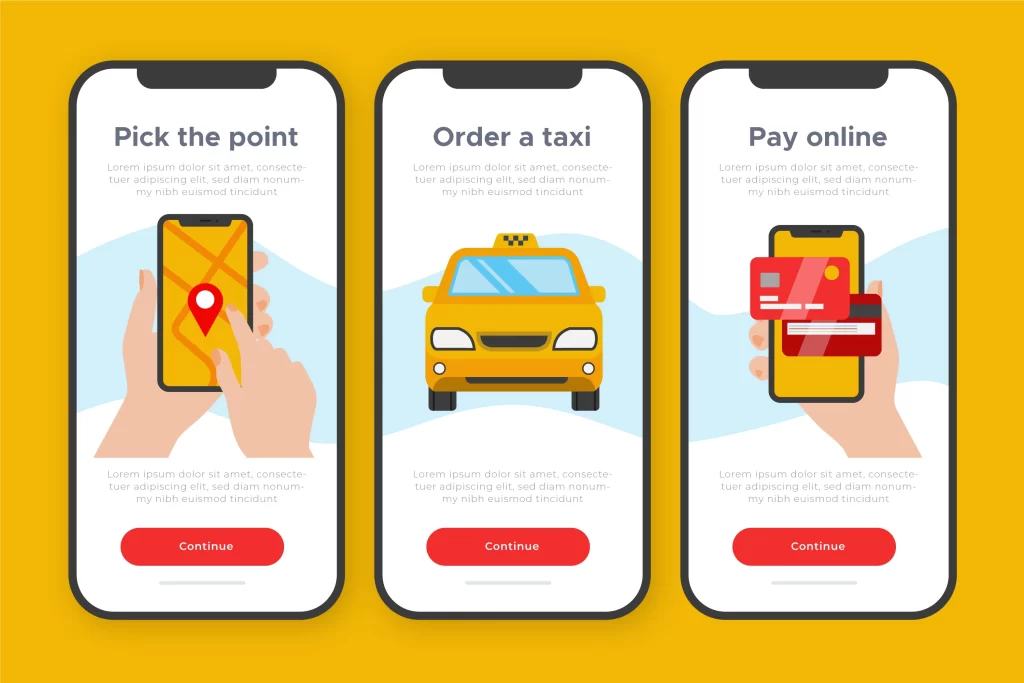
Once upon a time, getting a cab meant waving one down or calling a dispatch line. Now, a simple tap on your phone does the exact same thing – sometimes in as less as 10 minutes. Companies like Uber, Ola, Grab, Lyft, and Bolt come to mind, don’t they? But it’s not just taxis on-demand. Ride-booking apps have opened avenues to bike taxis, auto apps, long-distance carpooling, scooter rentals, and even luxury chauffeur services. But why? Here are some reasons:
1. Convenience Wins
If there’s one thing all on-demand apps share in common with each other, it’s convenience. Ride-booking apps allow users to book instantly, track their ride in real-time, pay cashless, and rate drivers for accountability.
2. Gig Economy Growth
Ride-booking apps have not only been a boon for the general public but even for riders looking to earn part-time or full-time. They’ve offered flexible and independent ways to earn, thus opening up new gigs and contributing to overall economy growth.
3. Scalability for Cities
These apps help reduce vehicle crowding, promote sharing, and even contribute to smart city goals.
WHAT MAKES TRANSPORT ON DEMAND APP DEVELOPMENT EXCITING?
To create standout ride-booking apps, you need more than just a map and a button. With a full-stack solution on intelligent UI design and UX services, seamless backend, and high uptime, they become more exciting. Here are some features that successful apps have managed to incorporate in their design:
1. Live GPS Tracking
Drivers and riders can track each other’s location. This is critical and requires precision in design.
2. Intelligent Matching Algorithm
Users share their location, and the app inherently knows which rider to match with their profile. All of this is not mere magic; it’s UI UX design services and advanced backend logic at play.
3. Fare Calculation and Surge Pricing
Nobody likes prices that are as opaque as a solid object. Be transparent with fare tariffs, and explain when it changes. This helps customers build trust with your services.
4. Driver and Passenger Profiles
Safety is a priority for both parties. Thus, ratings, driver information, and verification establishes trust.
FITNESS ON DEMAND APP DEVELOPMENT: POCKET-FRIENDLY GYM
Fitness on demand app development has given people instant access to fitness content and coaching. Think of workout videos, personalized training plans, wearable device integration, nutrition and meal guidance, progress tracking, AI-based coaching, and community support. All of this on your own terms without having to visit a physical gym – this empowers one to control their lifestyle.
Here’s why fitness apps are booming:
1. Accessibility Like No Other
Working out is for anyone and everyone – irrespective of who you are, what you do, and where you live. It’s there for you whenever you need it.
2. Affordability For Everyone
Online fitness apps are way more affordable than traditional gym membership charges. A full year of fitness app subscription costs less than 2 months at a premium gym.
3. Personalization Like It Knows You
Apps track your weight, diet, goals, body type, and schedule, so every plan curated by them is made just for you.
4. Variety and Dopamine Hits
Want to be fit? You got it. Yoga, Zumbo, strength training, running, meditation, and calisthenics are at your disposal for you to choose from. And when you progress further, that dopamine hit just keeps you coming back.
MUST-HAVES IN FITNESS ON DEMAND APP DEVELOPMENT
To make a great fitness app, especially for the US market, you need more than pretty screens. Here are some core features every fitness app must incorporate:
1. Personalized Workout Plans
Workouts must be made different from everyone based on age, goals, body type, and preferences. Be as personalized as you can get.
2. Progress Tracking
Make provisions to track users’ progress – everything right from weight, BMI, body measurements, milestones, and calorie burns – people love data that shows progress.
3. Wearable Syncing
For real-time health feedback, it’s important to integrate your app with Apple Watch, Fitbit, Garmin, or Google Fit.
4. Push Notifications and Community Features
You don’t want your users to lose the habit of working out or bore themselves out, do you? Push notifications and reminders help nudge users back into the habit loop. Plus, fitness becomes more fun with leaderboards, challenges, and support forums.
5. Live/On-Demand Videos and Offline Access
Users should enjoy live or pre-recorded classes. However, to make access available for everyone, even for ones with patchy internet in rural areas, it’s important to have an offline access feature as well.
ROLE OF UI/UX DESIGN SERVICES IN ON DEMAND APP DEVELOPMENT
UI design and user experience best practices are essential elements to effective on demand app development. It is vital to consider the needs of the public that each app is meant to individually serve. Here are some critical strategies of user interface design that must be followed:
1. Food Delivery Apps
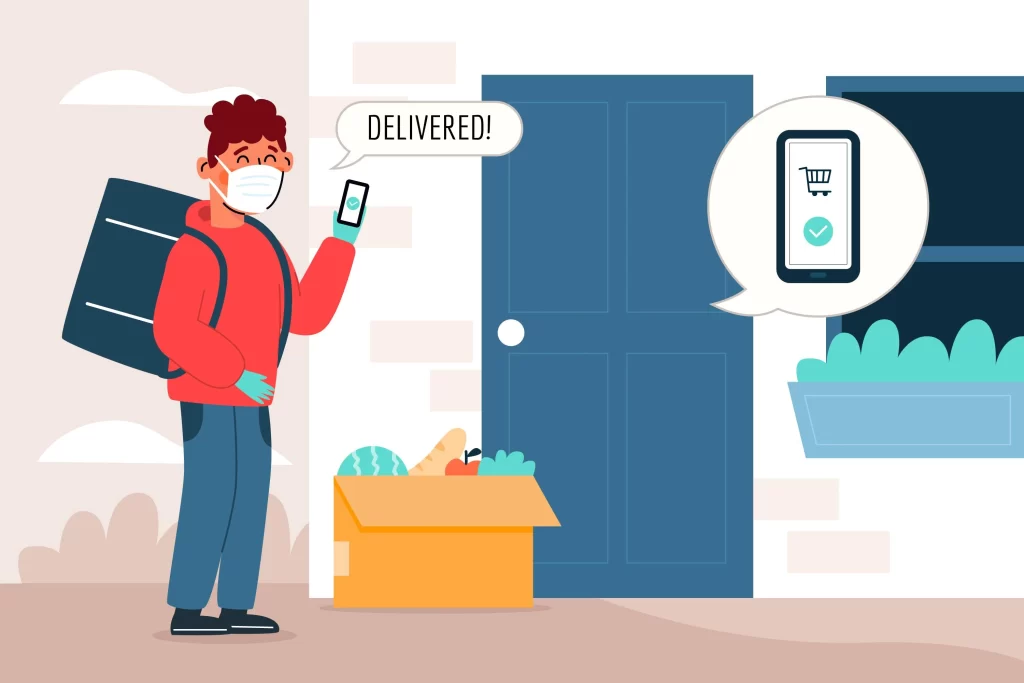
a. A UI UX design company like ours helps create flows where users find their favorite dishes in seconds, meal customization doesn’t feel hard, buttons are well-placed for one-handed use, and delivery status updates are visually satisfying.
b. The user end goal must be to serve tired, impatient, or distracted customers, so creating a clean user interface and frictionless user experience is key.
c. Food delivery needs effective syncing between the customer app, delivery partner app, and restaurant dashboard. So, effective user flow optimization and a solid backend helps things run smoothly.
2. Transport Apps
a. In the transport sector, seconds matter. The user interface design should launch fast, show nearby options in a jiffy, auto-detect location, offer 1-tap booking, and minimize text entry.
b. The user end goal means serving those who could be carrying groceries, standing in the rain, late for work, or in a new city with zero local knowledge.
c. Building a prototype and testing core flows like fare visibility, map loading speed, ETA accuracy, chat support features, and booking a ride can help.
3. Fitness Apps
a. These must feel personal, motivational, energizing yet visually calming.
b. Naskay Technologies has helped people and companies develop fitness apps from scratch through the best protocols of on-demand app solutions USA.
c. Our experience in UI UX design services, app development for small businesses in USA, and on demand app development makes us the best mobile app agency in the U.S to get you moving.
LESSONS TO TAKE HOME
From ordering a hot meal in minutes, to booking a ride across town, or crushing a personalized workout before sunrise, on-demand apps have practically reshaped every aspect of our lives. But behind every seamless swipe or smooth-as-butter experience lies intuitive and thoughtful on demand app development and user experience best practices. If you’re a business ready to capitalize on the on-demand app space, you should know by now that the market is hot and the demand is clearly rising. And Naskay has got the tools, the talent, and the passion to build your vision. Let’s brainstorm together.
FAQs
1. What makes on-demand food delivery apps like Zomato so addictive?
With seamless user flow optimization, UI design, and clear communication, these apps prioritize ease, timing, and trust.
2. Are fitness apps still popular now that gyms are back open?
Of course because people love flexibility. Hybrid fitness is the future. Mobile app design knows where trends are headed, and motivational fitness apps will definitely retain users.
3. What if my app idea spans multiple services like food, fitness, and transport?
Then you have a super app in the making! That’s even better. Our team can help prototype the idea and test it across various angles.
4. How do I ensure customer satisfaction in a competitive on-demand market?
User experience, period. Apps live or die by how they make users feel. Our UX services help focus on user experience best practices and increase loyalty.
5. How important is UI/UX when building an on-demand app?
It’s everything. No one looks at tech stack – they judge your app’s user interface. Bad design equals increased abandoned rates.
Ready to transform your business with a high-performing on demand app? Leverage proven strategies from top food, fitness, and transport apps to stay ahead in 2025.